Introduction
Vladivostok sits at the edge of the Sea of Japan: maritime influence, humid summers, cold winters and strong coastal winds. These conditions create great opportunities (long daylight in summer, mild sea-moderation) and specific challenges (salt spray, typhoon rains, short effective growing window). Below are practical, locally tuned tips and life hacks to make your garden productive and low-maintenance.
Climate and soil snapshot (what to remember)
— Long summer daylight but relatively short frost-free season — check your microclimate.
— Strong winds and occasional salt spray near the coast.
— Heavy summer rains and typhoon risk — good drainage is essential.
— Many sites are slightly acidic; always test soil pH before heavy liming or fertilizer use.
Seasonal calendar — quick tasks
— Early spring (March–April): tidy beds, finish compost, start cold-hardy seedlings (onions, leeks, early brassicas), set up cold frames.
— Late spring (mid–May): typical last frosts — transplant warm-loving crops after this; plant potatoes and peas earlier under mulch/cover.
— Summer (June–August): regular watering, ventilation for greenhouses, pest control, trellising, side-dress with compost/organic fertilizers.
— Autumn (September–October): harvest, cure roots and onions, mulch perennials, plant garlic (October), protect young shrubs for winter.
(Exact dates vary by year and microclimate — follow local weather.)
Smart microclimate and site hacks
— South-facing slopes and walls: use them to warm cold-sensitive crops (plant tomatoes, peppers closer to heat-retaining walls).
— Thermal mass: paint barrels black, fill with water and place inside a greenhouse to reduce night temperature swings.
— Use old windows/doors to build cold frames; bubble wrap on greenhouse sides for extra insulation in shoulder seasons.
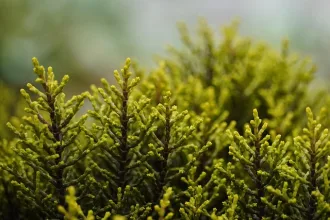
— Create sheltered spots with hedges or quick windbreaks (willow, sea buckthorn, thuja) to reduce wind damage and salt spray.
Soil, drainage and raised beds
— Raised beds improve drainage during typhoon rains and warm faster in spring.
— Use a 2:1:1 mix for raised beds: good topsoil : compost : coarse sand/leaf mould.
— For slopes, build terraced beds or swales to stop erosion and capture water.
— Test pH: if too acidic, lime judiciously; otherwise use compost, ash and dolomite lime.
Local organic fertilisers and amendments
— Seaweed is gold — rich in trace elements and growth stimulants. Wash to remove excess salt, then compost or make a dilute “tea.”
— Fish scraps (buried in compost or used as a diluted fertilizer) work well for heavy-feeders.
— Well-rotted manure and vermicompost boost soil structure and microbial life.
Season-extension and cheap heating
— Hotbeds: build a compost layer beneath beds to heat seedlings early in spring.
— Milk-bottle cloches: cut bottoms off plastic bottles to protect individual seedlings.
— Floating row covers/agril: protect against late frost and pests while allowing light and rain.
— For greenhouses, use double polycarbonate, insulate the north